
Why we Need Intellectual Humility to Depolarize Politics
And create progress for the benefit of all.

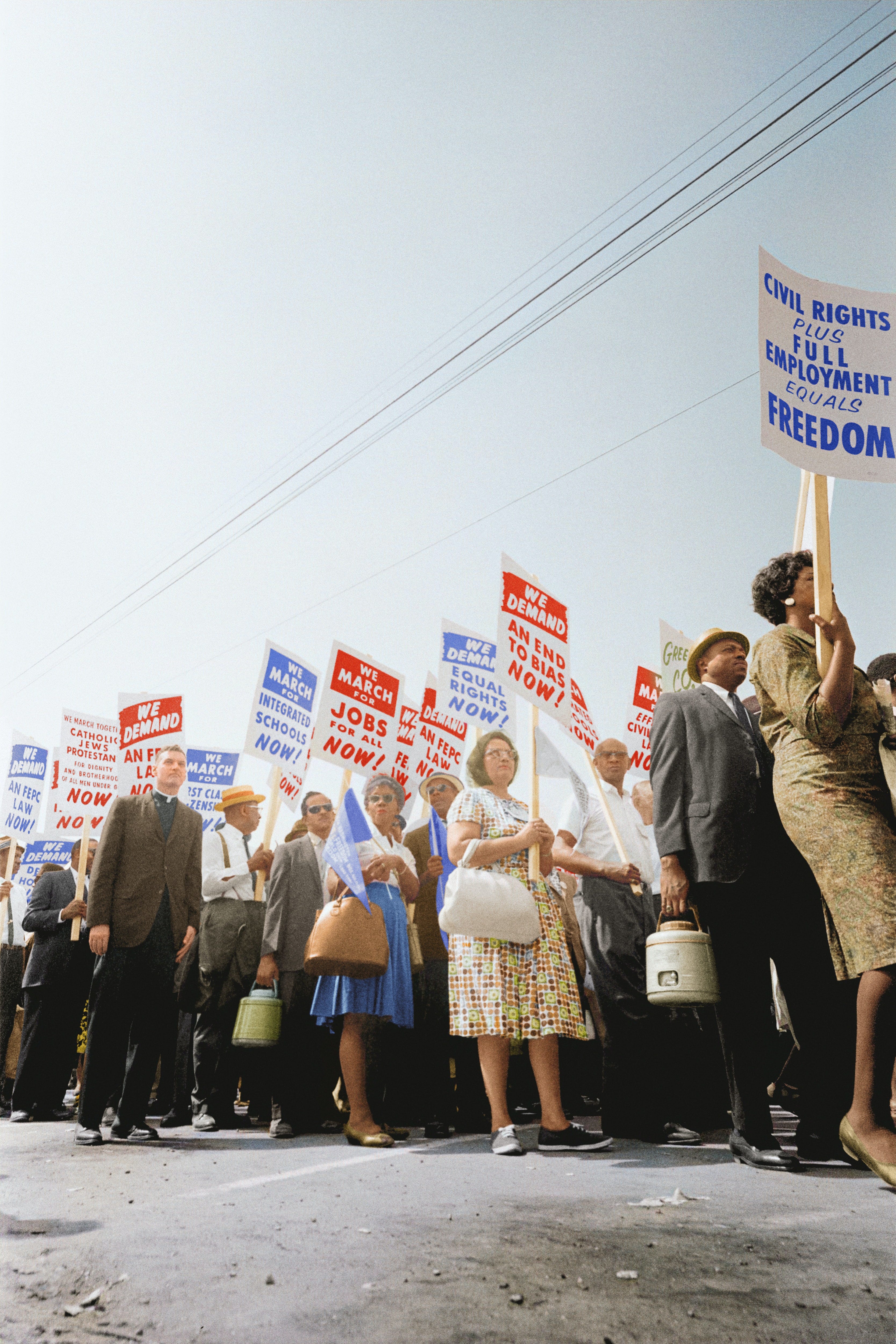
Photo by Unseen Histories on Unsplash
This year has seen unprecedented challenges while the world faced a global pandemic, and as the US experienced extreme polarization, hate speech, civil unrest and more people killed by law enforcement. Whatever happens in the US affects us all, especially for us as Canadians.
Facing a global pandemic has brought the better of us in some parts of the world, while in some other countries like the United States, governments, states, cities and citizens struggled to agree on anything, many even questioning the reality, experiencing what Arie Kruglanski, a social psychologist from the University of Maryland, calls a collective psychosis.
A new president-elect was nominated, signalling a need for change in a highly polarized country, and at the same time, a fear of change for others whose deep wounds and feelings of exclusion were more prevalent than ever.
A Country Disconnected from Reality: the Collective Psychosis in the US
‘Many conflicts in society stem from disagreements about values, politics, religion, cultural practices (…). These conditions become intractable when people are unable or unwilling to consider the possibility that their personal views might be, if not incorrect, at least no better overall than other perspectives’. - Mark D. Leary, Ph.D., Duke University, for the John Templeton Foundation.
How can we reconcile with others, after hate speech, systemic racism and civil unrest?
‘Admitting mistakes can be difficult — especially in a polarized society where certainty is prized — but learning to be intellectually humble may be key to fostering productive dialogue across the differences that divide us.’ - from The John Templeton Foundation white paper on Intellectual Humility.
Last Sunday, while distractedly listening to CBC radio, I heard an interview with Arie Kruglanski, a social psychologist from the University of Maryland, who studies how beliefs are formed.
In his interview, he explained why even though we all subscribe publicly to the values of freedom, family, inclusiveness and love, there are stronger values we have but rather not share: ’Power, material wealth and security, those are the values people don’t talk about because they are not as aesthetically as pleasing as love, liberty and inclusiveness’. Yet, ’they drive much of our subconscious, our human behaviour,’ added Arie.
According to research funded by the John Templeton Foundation, what divides us is more labels than beliefs. Yet, according to an Ipsos survey, 92% of Americans from all parties think that divisiveness should be reduced in the US.
When I watched the American election results analysis this-during many days on various US news channels, I found it disheartening as a Canadian to hear how people of different ethnic origins and colours were constantly labelled, as if there were different ’kinds’ citizens: the Latinos, the African-American, the Asians, etc. Perhaps, putting labels on others has become part of the American psyche, encouraging and reinforcing division into smaller groups and therefore, creating more polarization. Could it be too late to depolarize and reconcile opposites? How can change agents contribute positively to this dynamic?
Already in 2016, according to the Pew Research Center, a majority of Americans had a very hostile perception of the opposing party’s supporters, more negative than at any time in a quarter of a century. Interestingly, according to Don David, associate Professor of Counselling and Psychological Services at Georgia State University, there are more interracial marriages today than there ever were, but not so many of people with different political affiliations. ‘Tribalism has really shifted to be based on political identity’, according to Don David. Political humility might be a key element to bridge the gap between the partisans of both parties, according to Don David and his research team.
James Druckman, A Northwestern University political scientist from the Open Mind Platform- a John Templeton Foundation initiative, argues that ‘We tend to be polarized mainly through stereotypes of the ‘other side’. James Druckman argues that might the media, communicators and educators give information that is more accurate about the partisans, not only would the hostilities decline, but it might ‘be good for politics and social relationships’.
Arie Kruglanski, a social psychologist who studies how beliefs are formed, explained to CBC, why he thinks that Americans are in trouble because of the current state of polarization and the lack of a shared social understanding of reality. ’The fracturing of this understanding is very dangerous,’ he told CBC. ’Almost all traditional institutions are viewed with suspicion. This leaves a void that those with extremes points of view are eager to fill’, he argues.
In his interview for Spark at CBC, he reiterated how ‘when people don't know what the truth is anymore, they have the tendency to trust only a few closed ones and that this how extremism is formed and how this gave birth to nazism and fascism. The circles are getting smaller and smaller’, resulting in the creation of small tribes that are less open to different points of view.
Matthew Levendusky, a political scientist from the University of Pennsylvania argues that social media plays an important role ‘in distorting our views of people on the other side’. In his research, he explains that while most Americans don’t discuss politics on social media, ‘most people encounter political discussion online’. The result is that people tend to generalize what they see on social media as representative of people of the other party. ‘There is no filter to the content people read anymore and this might be dangerous for democracy’, he added.
’Now it is the struggle for humanity, argues Arie Kruglanski, a distinguished Professor of Psychology at the University of Maryland in an interview with CBC. ‘Even the elections can't be trusted, this is a state of selective anxiety or even collective psychosis. That consensus about who should be trusted is gone’, he concluded.
In his interview for Spark, he explained that humans beings tend to be closed-minded because people need certainty to make their daily decisions and conduct their lives. He argues, based on research, that all our decisions are based on beliefs. ‘Increased polarization, contributes to increasing xenophobia, violence, conflict and an ‘us vs them’ view of the world. Simple ideologies provide certainty’, he adds in his interview with CBC.
His research also shows that human beings have an inborn capacity to suppress evidence since our ideas are influenced by our motivation. ‘It is our motivation that drives our psychology. When the need for certainty raises, we prefer leaders with certain ideas and someone as similar to us as possible because their interests are beyond suspicion’, he adds.
Arie Kruglanski argues that depolarizing a highly polarized society like the US is extremely difficult. He cites WWII as the event it took ‘to shake humanity from its stupor’.
There is still hope, he suggests, ‘if the depolarization initiative is a whole society attempt. People's conscience can be appealed to such as the President of Germany, Schroeder, did around 2000, when neo-nazi groups resurfaced’, he added.

Photo by Clay Banks on Unsplash
Why we need Intellectual Humility
According to research funded by the John Templeton Foundation, most people tend ‘to be unjustifiably certain of their beliefs. Psychologists started to work on this topic, after World War II, when studying authoritarian personalities defined by ‘the conviction that one’s own beliefs and attitudes are absolutely correct and that those who disagree are misguided, if not evil’ (Adorno, Frenkel Brunswick, Levinson and Sanford, 1950).
The John Templeton Foundation defines intellectual humility as ‘one’s ability to recognize that their beliefs and opinions might be incorrect’. People who have developed intellectual humility are ready to recognize that ‘the evidence on which their beliefs are based could be limited or flawed, that they might lack relevant information, or that they might not have the expertise or ability to understand and evaluate the evidence’.
The research also found that people with high humility express greater empathy and tend to be more agreeable, .i.e, friendly, warm, forgiving, compliant and sympathetic.
People with low intellectual humility, however, ‘despite gathering less information and spending less time making decisions, tend to be more confident that they are correct’, according to the John Templeton research. They tend to be motivated to reach quick decisions, looking for certainty. They also tend to ‘have stronger emotional reactions to information that is contrary to their beliefs and to people who disagree with them’, according to this research.
When people are under a threat like economic downturns, war, terrorism, rising immigration,-according to research-, they tend to be more prone to have entrenched views. Even though people with moderate views can be arrogant, research from the John Templeton Foundation shows a tendency for people with more extreme views to be less humble because ‘moderate views often acknowledge the complexity, nuance, and equivocal nature of the issue at hand’.
‘Because being intellectually humble goes against the strong tendency to maintain and defend one’s views of the world, people must learn to be vigilant for instances in which they hold their views with unfounded confidence’, according to the John Templeton research.
We may wonder if our society is doomed to stay the same if people who need certainty to navigate life, tend to adopt extreme views. We may wonder if people can evolve, and possibly change.
The research found that people will change only if and when they see a benefit in doing so and if ‘it doesn’t have notable downsides, such as being perceived by people as uncertain, unintelligent or wishy-washy. People must believe that approaching the world in a more humble fashion is beneficial and even desirable’, concludes the research.
Intellectual humility can indeed, have greater benefits than many could have envisioned. It can not only improve the quality of one’s decisions but also help to foster more positive relationships and even, promote progress in organizations and society.
‘Intellectual humility should pave the way toward greater negotiation and compromise, which are also difficult when all parties are convinced that they are wholly correct. In increasingly heterogeneous societies, high intellectual humility should promote compromise solutions for the good of all’. - The John Templeton Foundation
Why we Need to Embrace Polarity to Depolarize Politics

Photo by Artur Shamsutdinov on Unsplash
According to Tim Kelly, a global change agent and internationally-renowned expert on higher purpose, ‘polarity is a natural and dynamic tension that exists within and around us. In contrast to the state of unity, opposite qualities, energies, emotions, opinions and states of being allow us to know and experience the other by contrast. There is a real and potent push toward separation and an equally strong pull toward unity as nature seeks equilibrium’.
Unity, the opposite of polarity, creates stasis, argues Tim Kelly. ‘By looking at polarity as a natural and essential force, change agents can use its dynamic energy to motivate, energize and create’.
There is always polarity between how things are and how you want them to be, which is uncomfortable, argues Tim Kelly. ‘If you can tolerate that tension, the discomfort, it is possible to draw the two opposites together’. In a presentation to the True Purpose Institute, Tim Kelly warned about the tendency for many to fail at reconciling polarities because they can’t tolerate the discomfort.
‘We can use this discomfort in our favour as a change agent. The more polarized are the opposites, the more dynamic they become. If the polarity cannot be resolved, there is a stuck situation, like what we see now with the politics in the US: people who are unable to resolve the dynamic tension. ‘It’s important to understand that as a change agent if we help one side, we contribute to making the polarity more stuck’, explained Tim Kelly in a group conference call with the True Purpose Institute.
According to Time, when one speaks against something, that person contributes to creating a new polarity; it is then likely to get stuck, and it may not be the best basis for change.
‘We, as change agents, have to avoid getting sucked in and look at the overall system. We have to ask ourselves: is this polarity creating something positive? Can we create something more useful? As a change agent, we have to act as a director, a coach rather than one of the players. We have to make use of the energies of polarities rather than getting sucked in on one side or the other, to avoid being part of a non-productive system’, explained Tim Kelly
In his presentation, Tim explained how we all have a natural tendency to play favourites and identify as good or bad.
Gun control arguments are a good example of the power play and polarization we see in the US, according to Tim Kelly.
‘After each gun shooting, on one side, some people argue that people need more guns to protect themselves. And on the other side, people say there are too many guns. Both sides get into a fight; there doesn’t appear to be a middle ground’, he added.
‘There is upset and grief voices frightened by the power in the hands of individuals with guns. And on the other side, there are people who enjoy having guns to hunt as part of their lives. And there is also another voice from people who don’t trust the government and want guns because they fear the government will become too powerful. I would love to get all these people in a room, while each side explains the merit of their argument, with other people listening’, added Tim.
A good strategy to hold all polarities, according to Tim, is to use our heart, by doing a meditation to activate it and shift our consciousness - by breathing and imagining our heart glowing for example-. Activating our heart, according to Tim’s expertise, make it easier to stay present and listen to all polarities without rejecting any side of the story.
‘More people are in the middle on the continuum’, argues Tim.
Embracing the law of polarity means starting a conversation with someone we don’t agree with, with the common ground we both have, whether it is a need for financial prosperity, a need for personal safety, being loved or embraced as the unique individual that we are. Starting with what we have in common could not only help to ease the tension but also, build bridges where it seemed impossible to build any when we held our positions too strongly.
According to Ari Kruglanski, ’We need to have an awareness and understanding of the danger that our psychology is imposing on our behaviour. The more people are enlightened about it in schools, politics, institutions, the more chance it can be reversed’, he adds.
Might we help kids to develop that awareness from a young age, by integrating it into the school curriculum, it might help us avoid repeating history? It seems that we have not yet learned and integrated the lessons of past history. It’s not about who does compromise, but rather about which result we wish to achieve. It might be time to listen to others and connect to our hearts so that we can all move forward in a more positive and constructive way for the benefit of all.
‘But I have seen the beauty of good, and the ugliness of evil, and have recognized that the wrongdoer has a nature related to my own- not of the same blood and birth, but the same mind, and possessing a share of the divine. And so none of them can hurt me. No one can implicate me in ugliness. Nor can I feel angry at my relative, nor hate him. We were born to work together like feet, hands, and eyes, like the two rows of teeth, upper and lower. To obstruct each other is unnatural. To feel angry at someone, to turn your back on him: these are obstruction.’ - Marcus Aurelius